

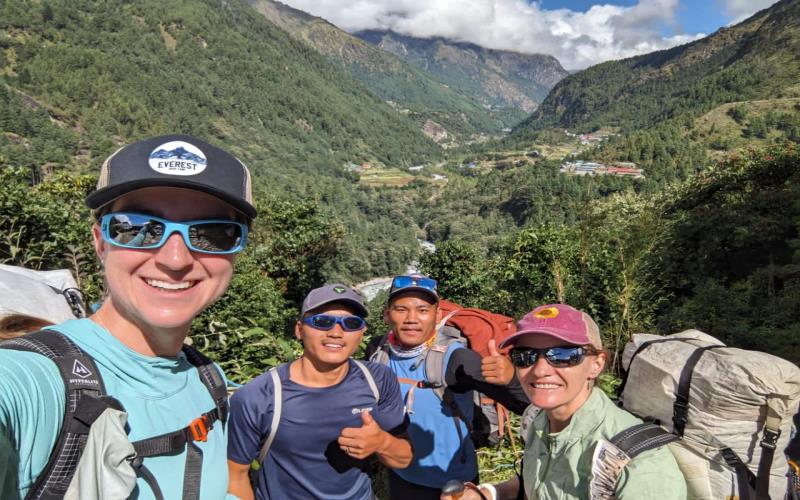
There is no denying the adventure that such an experience creates, for a trek to Base Camp of Everest. The Everest Base Camp is one of the most iconic treks in the world, giving trekkers the chance to both stand at the base of the world’s tallest mountain, Mount Everest, and experience the sublime beauty of the Himalayas. It is the journey, which includes incredible landscapes, strenuous terrain, and an intoxicating Sherpa culture, that lingers long after the hike is over.
The adventure starts in Kathmandu, Nepal’s vibrant capital, where trekkers gear up for their trek. The official start of the trek is an exhilarating flight from Kathmandu to Lukla. Lukla’s airport has a dramatic setting, perched high on the mountainside, providing incredible views even before the hike starts. From here, trekkers head to the Khumbu region, winding their way past forests, traditional Sherpa villages, and ancient monasteries. Along the way, trekkers are treated to spectacular views of snow-capped peaks like Everest, Lhotse, and Ama Dablam that inspire wow after wow.
The higher trekkers go into the mountains, the more challenging the realities of high-altitude trekking become. The air becomes too thin, and the human body needs to adjust to higher altitude. That’s why the trek is planned with strategic rest days in Namche Bazaar and Dingboche, among others. These rest days acclimatize and recover trekkers, making sure they are physically ready for the last segment to Everest Base Camp. It’s vital to acclimatize, and to trek too quickly can lead to altitude illness — something that can be avoided with plenty of hydration, good eating and not rushing the process.
The trek itself is part physical endurance, part mental toughness. The long days on the trail, rocky climbs, and changeable weather challenge a trekker’s resolve. But the benefits are hard to ignore. Step by step, they had reached Everest Base Camp — the place where climbers making a bid for the summit gather before their strong-armed attempts. One of the most emotional and powerful moments of reaching Base Camp — being at the foot of Mount Everest, surrounded by incredibly tall Peaks and glaciers — is a heart-pounding moment that fills trekkers with a sense of accomplishment like no other.
The Everest Base Camp trek is not just about the physical challenge; it’s also an immersive cultural experience. Sherpas are also native to the region of Khumbu, the locals who are known for their warm hospitality and spiritual connection with the mountains. On route, trekkers pass through Sherpa villages, where they can visit Buddhist monasteries, meet locals, and learn about the region’s unique traditions and way of life. Prayer flags, mani stones, and chortens litter the route, contributing a spiritual aspect to the trek that helps build a connection to the land.
The trek is a visual feast as well. The changing backdrop ranges from the lush rhododendron forests of the lower altitudes to the stark, snow-covered vistas near Base Camp. The Tibetan scenery, from jagged ridges to frozen waterfalls to endless valleys, is nothing less than spectacular. A favorite pastime of adventure travelers this type of trekking, through this pristine wilderness, is rarely possible anywhere else.
For most, the Everest Base Camp trek is more about the journey than the destination. It’s about testing personal limits, forging bonds with fellow trekkers, and connecting to the natural world as few other adventures can allow. The challenges are great but there is nothing like the sense of achievement when you finally stand at Everest Base Camp. This hike will transform you, body, mind, and soul, and it’s one that will be forever embedded in your hearts.
Everest Base Camp trek is an unforgettable experience for everyone, be it a true hiker, an adventure enthusiast, or a person who wants to go beyond their limitations. It really is a once-in-a-lifetime experience.
Trek to the Foot of Everest, the Highest Mountain on Earth
The hike Adventure trekking to Everest Base Camp takes you to the foot of the world’s highest mountain – Mount Everest. An incomparable experience, physically and mentally, this trek once in a lifetime. After a few atmospheric days in bustling Kathmandu, step on board your flight to Lukla, the ancient mountain airstrip that leads to the Khumbu. From Lukla, trekkers will begin an epic journey, traversing Sherpa villages, forests of rhododendrons, and Buddhist monasteries under the gaze of breathtaking snow-covered peaks. The other aspect of an endurance test — the trek itself — is taking its time, as trekkers ascend gradually through higher altitudes, allowing their bodies to adapt to the thinning air. Trekking on, they will take in some of the world’s most magnificent mountain scenery, with Everest and its neighbors always within view. Standing at 5,364 meters (17,598 feet), Everest Base Camp is a remarkable landmark in itself and offers a mesmerizing view of the Khumbu Icefall. Himalayan trekking is not just about reaching your destination but about testing your limits, experiencing nature, and absorbing the spiritual atmosphere of the Himalayas. Walking to Everest Base Camp is a journey for many that will change your outlook on the rest of your life.
Want to Do Everest? A Complete Guide to Base Camp Trekking
The Everest Base Camp trek is not for the faint of heart and demands meticulous preparation, physical conditioning, and mental toughness. Here’s a step-by-step plan to make your Everest experience better than ever. At first, check that you are ready physically for this arduous journey. Cardiovascular fitness, leg strength and stamina matter, since you’ll be trekking for hours a day. Endurance training for altitude is also vital since you will be trekking at over 5,000 meters (16,404 feet) above sea level. Once you’re in Kathmandu, you’ll fly via scenic flight to Lukla, the start of the trek. From Lukla, you’ll walk to Phakding, then trek through the Sherpa village of Namche Bazaar, where you’ll spend your first acclimatization day. As you hike farther, you will go through Tengboche and Dingboche and get closer views of Everest and other surrounding peaks. Pace yourself, take rest days, and keep hydrating, as acclimatization is one of the most important parts of the trek. The higher you ascend, the more arduous the elevation and the qualities of the landscape. It takes around 12-14 days of trekking to arrive at Everest Base Camp. The last leg is a reward with stunning views of the Khumbu Icefall, the Everest itself. Meet the friendly Sherpa people and discover their way of life while trekking. It’s an incredible blend of cardio and breathtaking beauty for the miles of your life.
Everest: Experience the Journey to Base Camp Like Never Before
One of the most legendary trekking journeys on our planet is to Everest Base Camp, the walk-in MaMile the high-highest along with the Himalayas. The journey is not only to base camp but also one of the challenges, the culture, and the natural beauty encountered on the way. The adventure starts with a flight to Lukla, a mountain town where the real journey begins. From there, trekkers make their way along a well-trodden route, weaving through Sherpa communities, pine forests, and river valleys. As you progress to higher altitudes, each day exposes you to different perspectives of Everest and surrounding peaks. We´ll see monasteries, prayer flags, and holy places along the way that make your trekking have a spiritual journey. The sharp ascents, changeable weather, and thin air are huge tests, but the benefits are huge. At every up village, you will be greeted by the incredibly welcoming sherpa people, who will share with you their culture, traditions and history. The trek features stunning views of Everest, as well as Lhotse and Ama Dablam, and ends with a powerful moment at Base Camp, standing at 5,364 meters (17,598 feet) with the world’s highest mountain looming overhead. This is a journey that resonates for long after it concludes, a circuit that is both physical and emotional and takes you deep into the ethos of the Himalayas.
The reconsidered mother : phobic about the Everest Base Camp trek.
Trekking to Everest Base Camp is one of the most amazing adventures in your life. Your adventure begins in earnest as you board the flight from Kathmandu to Lukla. This itinerary holds your hand as you walk through all the charming little villages of the Khumbu region, witness the local Sherpa way of life, and stop by a few monasteries as you take in breathtaking mountain views along the way. Climbing steadily to Everest Base Camp with steep ascents and long days on the trail, this trek is a test of physical endurance. But it’s not just about the challenge; the trek offers up some of the most amazing scenery on the planet. Along the way, the views of Everest, Lhotse, and other peaks get ever more magnificent, and the rich culture in the region makes every step worthwhile. The trek challenges both physically and socially through bonding moments in awe-inspiring scenery with fellow trekkers. The feeling of accomplishment at Base Camp is beyond words. At 5,364 meters (17,598 feet) tall, the world’s tallest mountain looms before you in an emotional moment. This is not merely a hike, but rather a journey that will significantly impact your life, a chance to connect with nature, test the boundaries, and witness the breathtaking beauty of the Himalayas.
Trekking Everest: Everything You Need to Know About the Base Camp Trek
EBC Trek It is a trek that requires physical and mental strength but also one that offers life-altering scenery and unforgettable experiences. Be prepared for rough paths, steep climbs, and unpredictable weather, especially at high elevations. Although the trek originally starts in Kathmandu, before flying to Lukla, you’ll quickly be immersing yourself in the beauty of the Khumbu region. You’ll pass through villages like Namche Bazaar, Tengboche, and Dingboche along the way, each providing a taste of the life of the Sherpa people. You will encounter the culture, history, and spirituality of the region as you visit monasteries, watch prayer flags fluttering in the wind, and marvel at the religious significance of the mountains.’ The air thins as you climb, and you’ll have to take it easy to allow your body time to adjust to the altitude to avoid altitude sickness. There are rest days to acclimatize your body to the high altitude. It takes about 10 days of trekking to reach Everest Base Camp, the view of the Khumbu Icefall and Everest itself is jaw-dropping. No doubt there, but there will also be fatigue, companionship with fellow trekkers, and deep psychological contemplation along the way. The trek is demanding, but it’s the crowning glory of standing at the base of the world’s tallest mountain that makes this a memory you will never forget.
Defining Adventure: Trekking To Everest Base Camp
The trek to Everest Base Camp is often touted as a life-changing trek, and for good reason; it is so much more than a trek, so much more than a physical challenge. This trek offers an opportunity to explore the breathtaking ruggedness of the Himalayas, engage with the Sherpa people’s culture, and feel the energy of the world’s highest mountain. The adventure starts in Kathmandu, where it continues to Lukla. From your starting point, you will hike on through postcard villages, thick forests, and across suspension bridges, gradually making your way to Base Camp. Every day on the trail, you’re figuring out how to cope with the high altitude and unpredictable weather, to walk on uneven terrain. But the physical challenges are tempered by the phenomenal beauty all around you — the soaring peaks, the glaciers, the spirituality of the mountains. The journey also provides a deeper connection with nature and spiritual awakening as you walk through monasteries and experience the Sherpa lifestyle. The bond that develops amongst fellow trekkers, offering help to one another during challenges and rejoicing together when things go right. It is a deeply profound experience when you arrive at Everest Base Camp, 5,364 meters (17,598 feet) with Everest staring you down. This trek, isn’t just about the destination, it’s the personal growth, the struggle, and the memories made on the journey. It is, after all, a life-changing adventure.
Book of the Month: Everest Base Camp Trek
There is no encounter like this one:Everest Base Camp Trek Difficulty, the one hero from a person’s imagination, who will fill you with enthusiasm for years to come; the ultimate adventure. As a challenging hike that works up to higher altitudes, you will push yourself through rugged terrain, cultural landscapes, and the heart of the Himalayas. The Everest Base Camp trek is speckled with breathtaking sights of iconic peaks, such as Mount Everest, Lhotse, and Ama Dablam, and dotted with peaceful Buddhist monasteries and beautiful Sherpa settlements. The adventure starts in Kathmandu, when you hop on a harrowing flight to the town of Lukla, which features a treacherous landing strip, launching you on your trek into the mountains. Every day is an adventure: hiking through jungles, crossing suspension bridges, immersing yourself in Sherpa culture. Altitude increases slowly, so you must acclimatize properly, because the thin air tests your body. And though it is challenging, standing at Base Camp (5,364 meters / 17,598 feet) with Everest looming above is an incredible sense of achievement and a humbling moment. It’s not just a trek; it’s an unforgettable experience that stays with you long after the journey is over, a physical, emotional and spiritual transformation.
A Trekker’s Experience From Kathmandu to Everest Base Camp
With incredible views, local culture, and an unforgettable trek, the hike from Kathmandu to Everest Base Camp is more than just a trek. After arriving in Kathmandu, trekkers embark on a scenic flight to Lukla, a small town (and airport) famous for its dramatic location. The journey to Everest starts from here, and trekkers traverse through the gorgeous Khumbu region trekking through the villages of Phakding, Namche Bazaar, Tengboche, and Dingboche along the way. Trekking culturethere is often as important as the trekking itself; along the way, trekkers meet Sherpa people, and local peoples, and witness traditional Buddhist customs. The scenery gets more dramatic as the hike climbs, with views of Everest, Lhotse, and other storied peaks becoming ever more prominent. Acclimatization is vital on the trek, with rest days scheduled at strategic locations along the way to acclimatize to the high altitude. The trek to Everest Base Camp usually takes between 12 and 14 days, winding through suspension bridges, dense forests, and alpine meadows, providing breathtaking views and moments to reflect. And then, having made it to Base Camp, the sense of achievement is second to none—standing beneath Everest, the highest mountain in the world, is an incredible moment that makes this trip simply unforgettable.
Experience Everest: Four Reasons why the Base Camp Trek should be on your Bucket List
For anyone looking to have the adventure of a lifetime, trekking to Everest Base Camp is a must. Why is this trek worthy of your bucket list? Because it’s not just a physical challenge — it’s a transformative experience. Arriving at Everest Base Camp places you at the foot of the world’s highest mountain, a rare window into the rugged landscapes and beauty of the Himalayas. On the way, hikers walk through the idyllic villages of the Sherpa people, Buddhist monasteries, and incredible scenery. Everest Base Camp Trek Cost The trek leads you through thick woods, over suspension bridges and glaciers, all the while side-by-side with towering peaks. Completing the trek also provides a deeper cultural experience, with trekkers interacting with Sherpa families and learning about their history, traditions, and lifestyle. The challenge of the trek itself — acclimatizing to high altitudes, traversing rugged terrain, and persevering through physically demanding days — is rewarding in its own right. But the true highlight comes at Everest Base Camp, with the enormous expanse of the Himalayan range surrounding your horizon. It’s not simply about the accomplishment of hiking and checking off a location on the list, but breaking out of your comfort zone, marveling at breathtaking landscapes, and finding the soul of adventure. So, if you are a trekker or not this Everest Base Camp trek will give you memories of a lifetime.
Trek to Everest Base Camp to Experience the Majestic Beauty of Everest
The trek to Everest Base Camp is pure epicness with natural beauty. The trek takes you through some of the most majestic scenery on the planet as you navigate the Khumbu region. Trekkers fly in from Kathmandu, head to Lukla, and soon, you’re soaking in jaw-dropping views of the Himalayas. The trek whisks you through lush forests, alpine meadows, and high-altitude deserts, with each day revealing new vistas. On the horizon rise the massive peaks of Mount Everest, Lhotse, Nuptse, and Ama Dablam, their snow-covered tops glimmering in the sunlight. The trail also boasts spectacular views of glaciers, rivers, and valleys, making it a photographer’s paradise. As climbers reach higher altitudes, the terrain becomes a brutal frozen earth of nature’s most primal forms. The trek to Base Camp is an active workshop in human endurance and will, each step bring trekkers closer to the world’s highest peak, Everest. Beautiful scenery combined with achievement creates a magical experience that will stay with the explorer forever, and the arrival at Base Camp is a bittersweet moment.
Trekking to Everest Base Camp: How to Experience the Majesty of the Himalayas?
The best way to experience the majesty of the Himalayas is through the Everest Base Camp Trek Itinerary. It starts right from the flight to Lukla from Kathmandu. The trek is less about visiting the Base Camp itself, and more about connecting with the grandeur of the Himalayas that inspires awe and an overawing calm. On your hike through Sherpa villages, thick forests, and alpine meadows, the sky-scraping summits of Everest and its neighboring peaks grow ever more awesome. The different altitudes provide vistas of diverse landscapes, ranging from rhododendron forests in the lower altitudes to the barren, high-altitude terrain near Base Camp. Plenty of opportunities to stop along the way to reflect on what you see in nature. You’ll traverse suspension bridges over deep gorges, skirt glaciers and witness Everest’s mighty presence as it draws ever closer. Days of rest along the trek allow you to soak in the scenery and acclimate to the altitude. The last leg to Base Camp itself offers trekkers an unforgettable vista of the Khumbu Icefall and Everest, mighty as ever. This trek provides a unique chance to experience the raw, untamed beauty of the Himalayas while also giving you the opportunity to test your physical and mental endurance.
Everest: The Spiritual and Scenic Wonders of Base Camp Trekking
As a result, trekking the Everest Base Camp is not only a difficult physical challenge but a deeply spiritual and herculean experience journey that provides the opportunity to connect not only with nature but also with the Sherpa people and their culture along the way. You are trekked up to Everest Base Camp in the Khumbu region where at every step you see the beauty of the mountains. During the trek, pilgrims can pass through sacred Buddhist areas and visit monasteries or stupas while the colorful prayer flags on the air give the trek all its spirituality. Deeply connected to these majestic and formidable mountains, the Sherpa people live in balance with their ecosystem, and trekkers have much to learn from their culture, traditions, and spirituality. The trip itself includes time for contemplation and beauty as you gaze across snowy summits, glaciers, and valleys. Higher in the atmosphere the landscapes shift—where breathtaking vistas stretch farther and appear more distant, where solitude is sometimes measured in days between human contact. The trek to Everest Base Camp crowns both a physical achievement and a spiritual discovery, a connection with the mountains’ overwhelming forces and the area’s deep culture. Overall, the trek serves as a poignant reminder of the beauty and resilience of both nature and humanity, providing a transformative experience that lingers long after the journey is over.
