

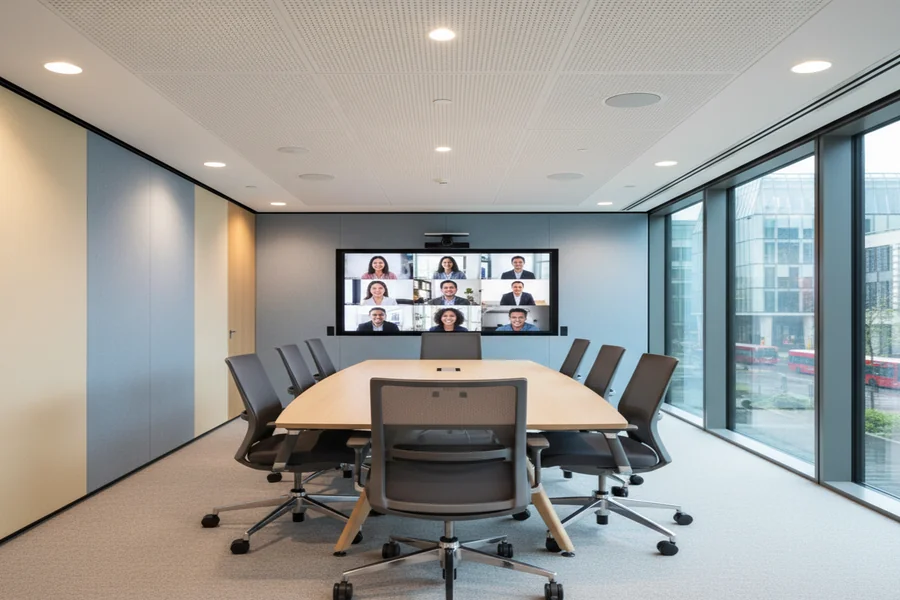
The modern UK office is undergoing a significant transformation as businesses adapt to hybrid work models. While 73% of UK companies have embraced hybrid working, only 28% have successfully redesigned their physical spaces to match these new operational needs. The contemporary meeting room is no longer just a place to sit around a table; it has evolved into a critical hybrid communication hub. To ensure in-person and remote participants feel equally included, companies must move away from outdated setups and invest in integrated technology that fosters seamless interaction. Developing a comprehensive conference room equipment list is the first step toward creating a productive, tech-enabled environment that supports the needs of a distributed workforce.
Core components of a hybrid meeting room setup
A high-functioning hybrid meeting room requires a balance of hardware and software that removes friction from the collaboration process. At the heart of this setup are high-definition display screens that allow remote participants and shared content to be viewed with clarity, preventing the common issue of crowding around small laptop screens. Equally important are professional-grade videoconferencing cameras capable of speaker tracking, which helps remote attendees follow the flow of conversation naturally. When following a conference room equipment list, do not overlook audio quality, as clear communication is the foundation of any successful meeting. Integrating ceiling microphones or high-quality speakerphones ensures that every voice in the room is captured accurately, regardless of where participants are seated.
Beyond hardware: design and data-led planning
Modern office design in the UK is increasingly focused on flexibility and human-centric spaces. Beyond the technical equipment, businesses are investing in modular furniture and acoustic treatments to manage noise levels and improve overall meeting quality. Incorporating room booking systems and one-touch control panels allows employees to reserve spaces and start meetings without the frustration of tangled cables or technical glitches. Furthermore, forward-thinking organisations are using occupancy sensors and utilization data to right-size their spaces, ensuring that meeting rooms match the actual demand of their teams. By choosing the right mix of technology and ergonomic design, UK offices can create environments that promote both collaboration and employee wellbeing.
Future-proofing your collaboration spaces
As we look toward 2026, the trend in the UK is shifting toward immersive and inclusive meeting experiences. This involves moving beyond basic connectivity to create multipurpose hubs that can adapt from small huddle sessions to large, client-facing presentations with ease. Consistency is key, and implementing a unified communications platform ensures that the user experience remains identical across all company locations. By focusing on simplified user interfaces and data-driven infrastructure, businesses can avoid over-provisioning and ensure that every piece of technology serves a clear purpose. Investing in these professional-grade solutions not only enhances daily operations but also demonstrates a commitment to maintaining a competitive, modern workplace that attracts and retains top talent in an evolving market.
