

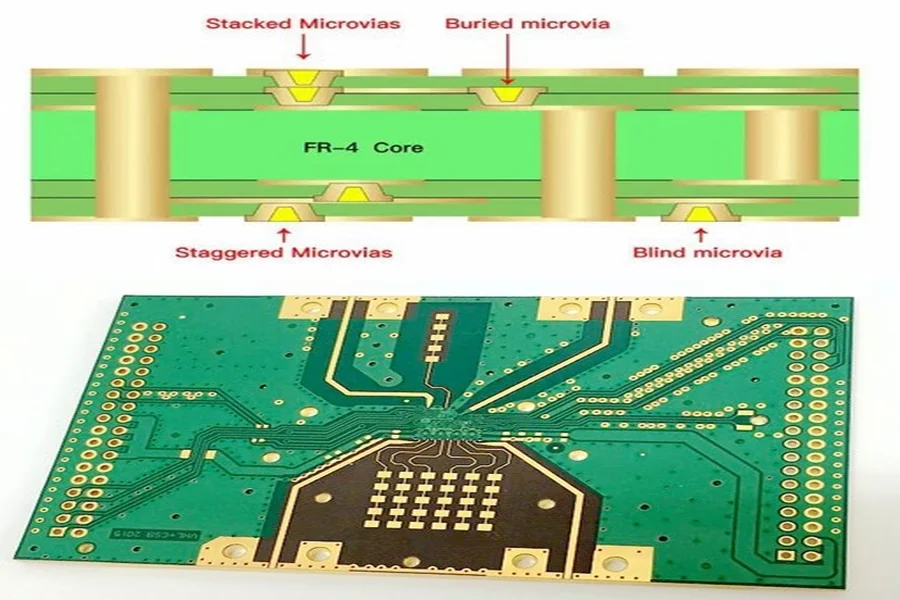
A microvia PCB board is a type of printed circuit board that uses extremely small vias—typically less than 150 microns in diameter—to connect different layers in a multi-layer PCB. These microvias are created using laser drilling technology, allowing for precise interconnections in compact spaces.
Microvia PCB boards are essential in high-density interconnect (HDI) designs, where components are closely packed, and electrical connections must be routed efficiently. This makes them an ideal choice for modern electronics that demand miniaturization without sacrificing performance.
Key Features of Microvia PCB Board
The most defining feature of a microvia PCB board is its use of very small, laser-drilled holes that connect layers directly without taking up much surface space. These vias can be blind (connecting outer layers to one or more inner layers) or buried (connecting only inner layers).
The technology allows for shorter electrical paths, which reduces signal loss, improves performance, and supports high-speed data transmission. It also enables the creation of boards with more layers and tighter component spacing.
Advantages of Microvia PCB Board
One of the biggest advantages of a microvia PCB board is space optimization. By reducing the size of vias, designers can fit more traces and components in a smaller area, leading to smaller, lighter devices.
Microvia technology also enhances signal integrity by shortening the electrical path and minimizing electromagnetic interference (EMI). In addition, these boards offer better thermal performance and can handle high-frequency applications with ease.
Applications of Microvia PCB Board
Microvia PCB boards are widely used in industries where compact size, lightweight design, and high performance are critical. This includes smartphones, tablets, wearable electronics, advanced medical devices, automotive electronics, and aerospace systems.
They are also common in networking equipment, servers, and telecommunications systems where high-speed signal transmission is crucial. The ability to integrate more functionality in less space makes microvia technology indispensable for next-generation electronic products.
Manufacturing Considerations for Microvia PCB Board
Manufacturing a microvia PCB board requires advanced laser drilling equipment, precise layer alignment, and high-quality plating processes. Each microvia must be drilled accurately and plated with conductive material to ensure reliable electrical connections.
Stacked or staggered microvia designs may be used depending on the complexity of the circuit. Careful process control is critical to avoid defects such as voids, misalignment, or insufficient plating thickness, which could compromise board reliability.
Future Outlook of Microvia PCB Board Technology
As electronics continue to become smaller and more powerful, the demand for microvia PCB boards is expected to grow. Advancements in laser drilling, materials, and plating processes will enable even finer vias and more complex interconnections, pushing the boundaries of what’s possible in PCB design.
This technology will remain a cornerstone of HDI PCB manufacturing, especially as 5G, IoT, and AI-based devices require higher performance in smaller form factors.
Choosing the Right Microvia PCB Board Manufacturer
Selecting an experienced microvia pcb board manufacturer is essential to achieving high-quality results. A professional microvia pcb board manufacturer will have the expertise, equipment, and quality control processes necessary to produce boards with precise via placement, reliable plating, and exceptional performance. Partnering with the right microvia pcb board manufacturer ensures your products meet industry standards and deliver consistent results in demanding applications.
