

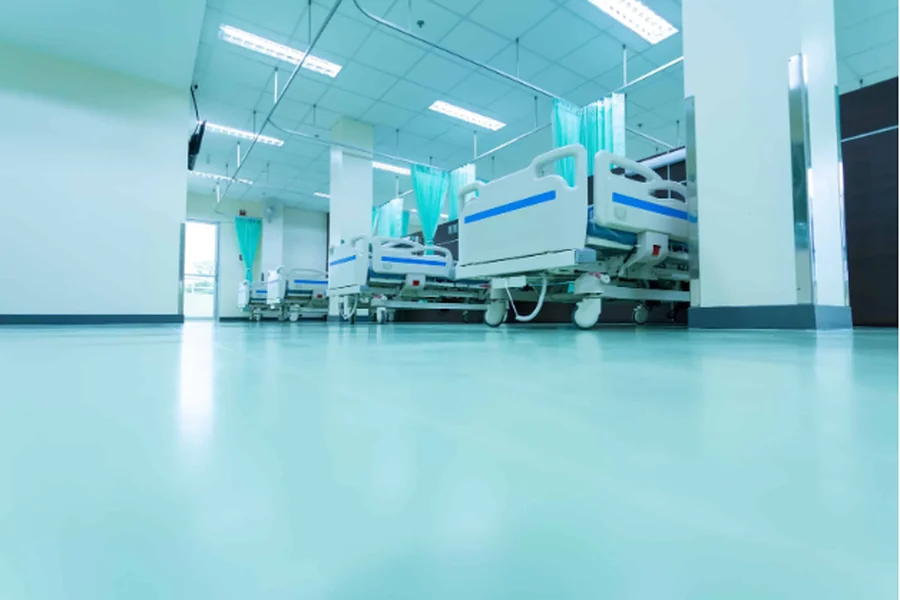
In every hospital, thousands of footsteps are taken across the floors each day. From the emergency department to intensive care units, every corridor is constantly exposed to patient and staff movement. The floors that patients, nurses, and doctors walk on can play a crucial role in preventing the spread of dirt, bacteria, and infections.
That’s exactly why antibacterial hospital flooring is designed — to inhibit the growth of microbes, maintain a hygienic environment, and reduce the risk of cross-contamination.
In this article, we’ll explain what hospital flooring is, explore its different types, and discuss which options are best suited for various areas within healthcare facilities.
What Is Antibacterial Hospital Flooring and How Does It Work?
Antibacterial hospital flooring is made from materials that prevent the growth and multiplication of microorganisms. These floorings are formulated with additives such as silver ions, copper, or nanocomposite compounds that eliminate bacteria and fungi on contact. The protective layer is uniformly distributed throughout the flooring surface, ensuring long-lasting antibacterial performance that doesn’t wash away or fade over time.
The surface of this flooring is smooth, seamless, and non-porous, preventing dirt and moisture from penetrating it. This makes cleaning and maintenance much easier and reduces the need for strong chemical detergents. Such properties are especially vital in areas with high contamination risk — like operating rooms, laboratories, and intensive care units (ICUs).
Beyond hygiene, antibacterial hospital flooring also offers excellent durability. It resists deformation under heavy foot traffic, cleaning agents, and chemical disinfectants, ensuring long-term performance and safety in demanding medical environments.
Key Features of Standard Hospital Flooring
Choosing the right flooring for healthcare environments is a crucial decision in creating a safe and hygienic design. Hospital floors must ensure safety, cleanliness, and durability against heavy use and chemical exposure. The following features are essential when selecting hospital flooring:
Slip Resistance:
The surface must provide sufficient traction to reduce the risk of slipping, especially during cleaning or when the floor is wet. This feature is particularly vital in wash areas and busy corridors where safety is a top priority.
Chemical Resistance:
Hospital flooring should withstand continuous exposure to disinfectants, alcohol, and cleaning agents without discoloration or cracking. Otherwise, the surface may become porous, allowing contaminants to penetrate beneath the top layer.
Antibacterial and Antifungal Properties:
The flooring material should prevent the growth of bacteria and fungi and be easy to clean. Models containing silver or copper additives perform exceptionally well in infection control.
Durability Under Heavy Traffic:
In high-traffic areas such as emergency departments and corridors, flooring must endure heavy footfall and the movement of medical equipment. Choosing the proper thickness and adhesive quality is critical in these sections.
Seamless and Non-Porous Surface:
A seamless, non-porous surface prevents the penetration of moisture and dirt, making cleaning easier and maintaining a more hygienic environment.
Sound and Vibration Reduction:
In patient wards or ICUs, acoustic flooring helps create a calm atmosphere by reducing noise and vibration. Sound-absorbing floors improve patient comfort and enhance staff concentration.
Aesthetic and Functional Harmony:
The color and pattern of the flooring should contribute to a soothing visual atmosphere and match the function of each area. For example, soft tones are ideal for patient rooms, while bright, contrasting colors work better for corridors and directional pathways.
| Type of Flooring | Features | Advantages | Limitations | Typical Applications |
|---|---|---|---|---|
| Homogeneous Vinyl | Uniform, durable, antibacterial | High durability, heat-weldable joints, easy cleaning | Higher cost compared to PVC | Operating rooms, ICUs, laboratories |
| PVC (Rolls & Tiles) | Moisture-resistant, available in various designs | Economical, easy installation | Lower durability under heavy traffic | Clinics, administrative areas |
| Epoxy | Seamless, glossy, hard surface | Waterproof, antibacterial, chemical-resistant | Requires professional installation | Operating rooms, laboratories |
| Polyurethane (PU) | Flexible and impact-resistant | Long lifespan, heat-resistant | More expensive than epoxy | Pharmacies, corridors, technical rooms |
Advantages of Using Antibacterial Hospital Flooring
Antibacterial hospital flooring is one of the most effective solutions for creating a safe, hygienic, and durable environment in healthcare facilities. Beyond its visual appeal, this type of flooring is an essential part of the hospital’s infection control and maintenance system. Below are the key benefits it offers:
Reduced Cleaning and Maintenance Costs
Thanks to its smooth and non-porous surface, dust and contaminants cannot penetrate the flooring. This makes cleaning faster and reduces the need for harsh chemicals or frequent washing. As a result, both labor costs and chemical consumption decrease significantly.
Increased Durability and Service Life
The flooring’s resistance to abrasion, impact, and disinfectants ensures long-lasting performance, even in high-traffic areas such as corridors and emergency departments. Compared to ordinary flooring, its lifespan is several times longer, minimizing the need for early replacement.
Enhanced Safety for Patients and Staff
The surface of antibacterial flooring provides adequate slip resistance, reducing the risk of falls during cleaning or in humid conditions. Additionally, conductive or antistatic versions prevent electrostatic discharge in operating rooms—critical for protecting both sensitive equipment and patients.
Prevention of Hospital-Acquired Infections (HAIs)
In hospital environments exposed to liquids, chemicals, and continuous human contact, preventing microbial growth is crucial. The antimicrobial layer of this flooring inhibits the spread of bacteria, fungi, and mold, helping to control infection risks and maintain sanitary conditions.
Improved Comfort and Patient Experience
The use of soft, soothing colors and harmonious design in these floors contributes to a calmer, more welcoming atmosphere. By selecting colors suitable for each department, hospitals can create environments that promote patient relaxation and staff focus alike.
Investing in antibacterial hospital flooring is a preventive measure that ensures hygiene, durability, and cost efficiency—all essential elements of a sustainable healthcare environment.
Installation and Execution of Hospital Flooring
The precise and professional installation of hospital flooring is just as important as choosing the right material. Even the smallest mistake in subfloor preparation or seam sealing can allow moisture and contaminants to penetrate, ultimately shortening the floor’s lifespan. A professional installation not only preserves the visual appeal of the surface but also ensures long-term hygiene and safety performance.
Polyflor: A Leading Brand in Healthcare Flooring
Among the leading brands in the field of medical flooring, Polyflor stands out as one of the most recognized global manufacturers. Based in the United Kingdom with over seven decades of experience, Polyflor produces a wide range of specialized flooring, including homogeneous vinyl, anti-static, slip-resistant, and anti-bacterial options.
All Polyflor products are manufactured in accordance with international standards such as ISO 10581 and EN 13845.
Polyflor Iran: Official Distributor and Project Partner
Polyflor Iran, the official distributor of the brand in the country, offers not only genuine products but also professional consultation, specialized installation, and after-sales support for hospital projects.
The company has successfully implemented its flooring solutions in numerous major healthcare projects — from operating rooms and ICUs to laboratories and general wards.
