

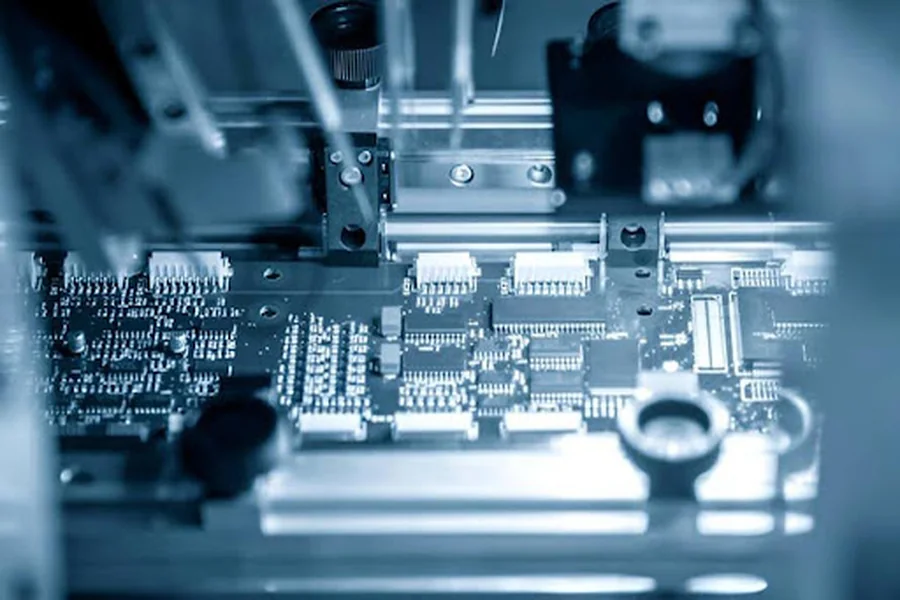
In today’s fast-paced electronics industry, SMT PCB assembly (Surface Mount Technology Printed Circuit Board Assembly) stands as one of the most significant technological advancements. It has revolutionised how electronic components are mounted, offering high precision, compact design, and rapid production capabilities. Whether in consumer electronics, automotive systems, medical devices, or industrial controls, SMT assembly has become the foundation of modern electronic manufacturing.
What Is SMT PCB Assembly?
SMT PCB assembly is a process used to mount electronic components directly onto the surface of a printed circuit board (PCB). Unlike through-hole assembly, which involves inserting component leads through drilled holes, SMT components—known as surface-mount devices (SMDs)—are placed and soldered onto pads located on the PCB surface.
This technique allows for smaller, lighter, and more densely packed electronic circuits. It enables manufacturers to create more complex and feature-rich devices while keeping them compact and cost-effective.
The SMT PCB Assembly Process
The SMT PCB assembly process involves several precise and automated stages designed to ensure accuracy, efficiency, and quality.
-
Solder Paste Application
The process begins with applying solder paste onto the PCB pads using a stencil printer. This paste contains tiny solder particles suspended in flux, which helps secure the components during reflow soldering.
-
Component Placement
Automated pick-and-place machines accurately position surface-mount components on the solder-pasted pads. These machines operate at incredible speeds, placing thousands of components per hour with minimal error.
-
Reflow Soldering
After placement, the PCB passes through a reflow oven where controlled heat melts the solder paste, creating strong electrical and mechanical connections between the components and PCB pads.
-
Inspection and Quality Control
Post-soldering, the board undergoes rigorous inspection using Automated Optical Inspection (AOI) systems, X-ray imaging, and functional testing to ensure every joint is perfectly soldered and every component is correctly positioned.
Advantages of SMT PCB Assembly
The widespread adoption of SMT PCB assembly is due to its numerous benefits over traditional methods.
-
Miniaturisation and Compact Design
SMT enables the placement of smaller components with no need for drilled holes, allowing designers to create compact, multi-layered PCBs that support advanced functionalities.
-
High-Speed and Automated Production
SMT assembly is highly automated, reducing human error and increasing production efficiency. It allows for high-speed assembly, which is essential for large-scale electronics manufacturing.
-
Improved Electrical Performance
Shorter signal paths between components result in reduced parasitic inductance and capacitance, enhancing signal integrity and overall circuit performance.
-
Cost Efficiency
Automation reduces labour costs and material waste, making SMT a cost-effective solution for mass production. Additionally, reduced board space and material requirements further lower production costs.
-
Enhanced Reliability
With strong solder joints and consistent placement accuracy, SMT-assembled boards demonstrate excellent vibration resistance and reliability—vital for automotive, aerospace, and industrial applications.
Common Applications of SMT PCB Assembly
SMT PCB assembly is utilised across nearly every modern electronic product category, including:
- Consumer Electronics: Smartphones, tablets, and wearable devices rely on SMT for miniaturised designs.
- Automotive Systems: Engine control units, infotainment systems, and safety sensors utilise SMT for reliability under harsh conditions.
- Medical Devices: Compact devices like heart monitors and imaging equipment benefit from precision SMT assembly.
- Industrial Automation: PLCs, sensors, and control units use SMT for robust and high-performance circuitry.
- Telecommunication Equipment: SMT supports high-frequency, high-speed circuits in routers, modems, and network hardware.
SMT vs. Through-Hole Assembly
While SMT offers superior automation and density, through-hole assembly remains useful for specific applications requiring mechanical strength or power handling. In practice, many electronic products combine both methods—using SMT for smaller signal components and through-hole for connectors or heavy-duty parts. This hybrid approach ensures optimal performance and reliability.
Quality Control in SMT PCB Assembly
Maintaining quality is essential in SMT PCB assembly, as even the smallest defect can compromise functionality. Advanced manufacturers follow strict inspection protocols such as:
- AOI (Automated Optical Inspection) to detect misaligned or missing components.
- X-Ray Inspection to verify hidden solder joints on BGAs or multilayer boards.
- In-Circuit Testing (ICT) for electrical verification.
- Functional Testing to ensure boards perform as designed before shipment.
These processes help ensure that every assembled PCB meets IPC and ISO quality standards.
Partner with Experts in PCB Assembly Services
As electronic products become more advanced, working with experienced professionals in SMT PCB assembly is crucial. A skilled manufacturing partner can ensure precise component placement, consistent soldering quality, and reliable performance for both low and high-volume production.
If you’re looking for dependable PCB assembly services, choose a partner who combines advanced automation with strict quality control. From prototype builds to full-scale production, expert PCB assemblers can help transform your design concepts into high-quality, functional electronic products. With the right service provider, you gain not only manufacturing precision but also long-term reliability and support for your innovative designs.
